Discourse New User Tips and Tricks

Originally published December 2016 by Jeff Atwood. Updated December 2025.
Getting going in an online community can be overwhelming, especially if you've never used the platform before. If you're new to Discourse, here are a few quick tips and tricks to get you started!
A Note: From 2025
We've made some updates since this post was first published! You now have more flexibility in how you write, communities can work across languages automatically, and the Discourse experience is more polished on mobile. But the core idea remains the same - Discourse builds permanent, searchable knowledge instead of chat that disappears into the void.
Think about it this way: every answer someone posts today becomes findable by someone with the same question six months from now. That's why Discourse discussions get indexed by Google and why you can find solutions to obscure problems in forums that have been running for years. Chat platforms are your short-term memory. Forums are your long-term memory.
You don't need to be online 24/7. Read when you want, respond when you're ready. This isn't Slack - nobody expects instant replies. Better yet, taking time to think through your response usually makes it better.
Want to see what Discourse looks like in action? Browse communities on Discover →

Reading
Selecting a title from the topic list will always take you to your last read post in the topic. To enter at the top or bottom instead, select the reply count or last reply date.
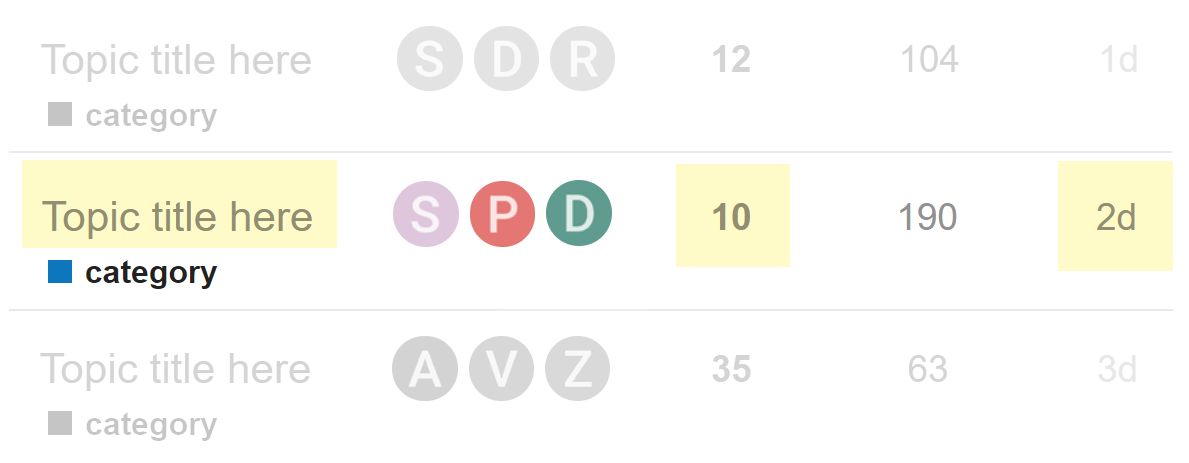
Topics above the light red line are new or updated since your last visit. If you have read all the way to the end of a topic, its title will be light grey instead of black.
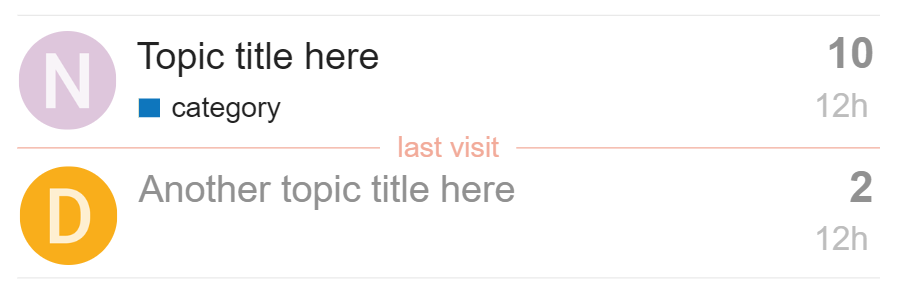
Real example:

Navigation
For search, the menu, or your user page, use the icon buttons at the upper right.

While reading a topic, use the timeline on the right side to jump to the top, bottom, or your last read position. On smaller screens, select the bottom progress bar to expand it.
(If you have a physical keyboard, you can also press Shift+? for a list of keyboard shortcuts.)
Replying
Press any  Reply button to open the editor panel at the bottom of your browser. Continue reading (and even navigate to different topics) while you compose your reply; minimize the editor for more room. Drafts will automatically be saved as you write.
You now get to choose how you want to write. If you like formatting with buttons (bold, italics, insert link) and seeing exactly what you're creating as you type, use the new rich text mode. It works like Google Docs or Notion - visual and straightforward.
If you prefer typing markdown by hand, just toggle to markdown mode. Both work identically; the same content renders the same way. Pick whatever feels natural.
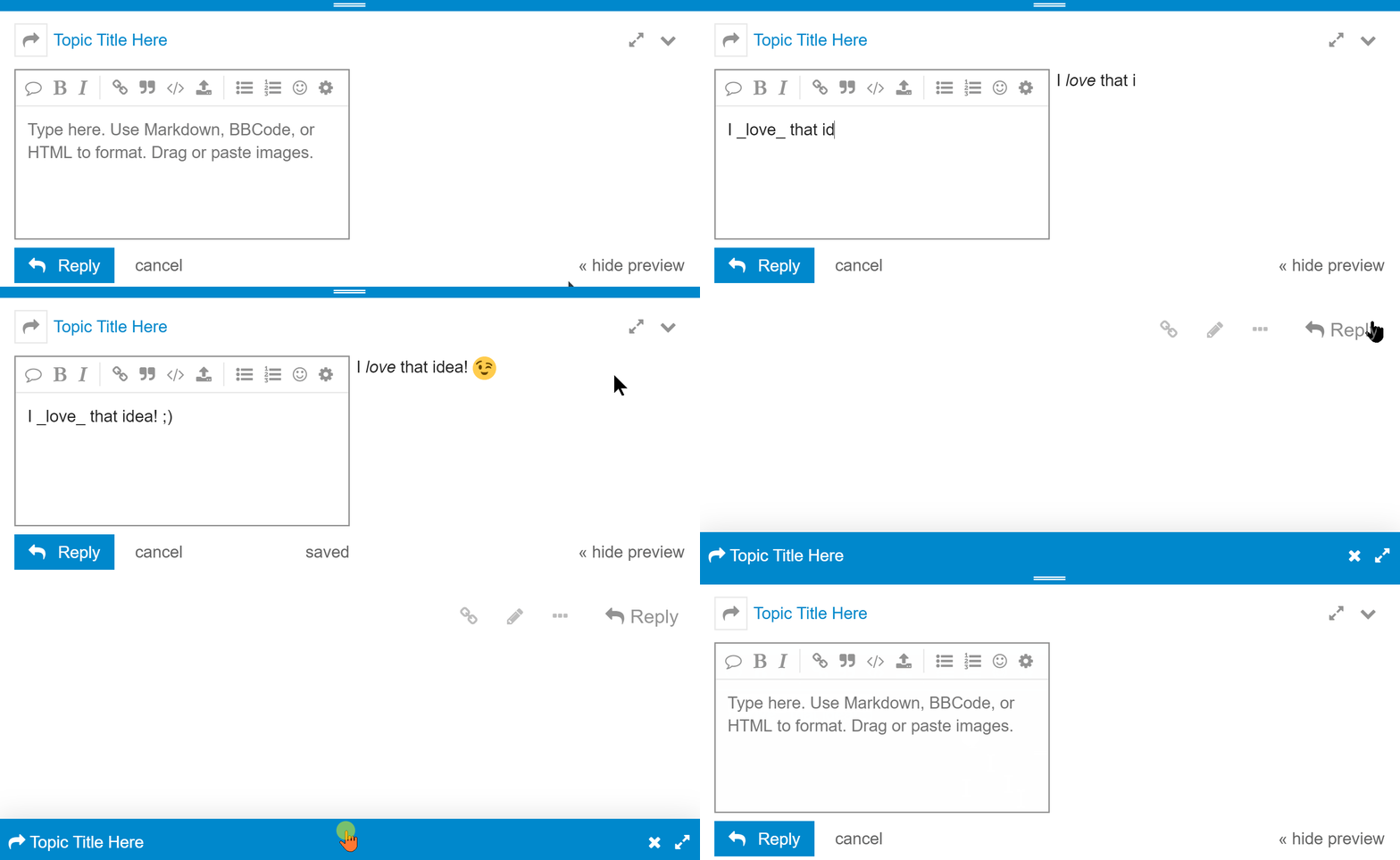
The composer stays open while you keep reading - minimize it if you need more screen space. Continue scrolling, even navigate to other topics. Your draft saves automatically. On mobile, it goes full-screen so you're not fighting with a tiny box.
Managing what you add:
- Click on a link to visit it, edit it, copy it, or remove it
- Drag image corners to resize; add captions; delete as needed
- Drag and drop images directly into the composer
- Add polls, dates, spoilers, or footnotes through the toolbar buttons
Quoting
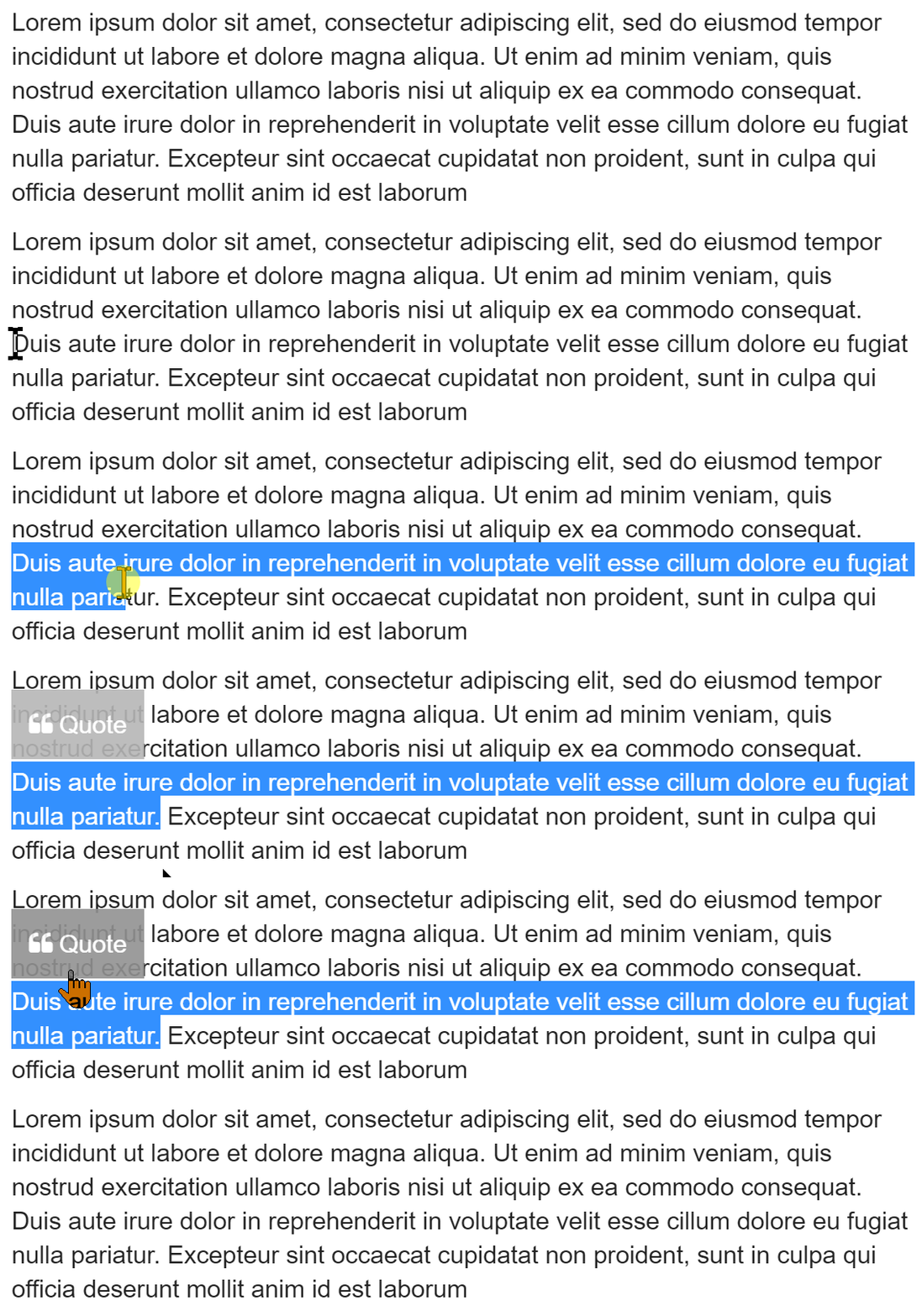
To insert a quote, select the text you wish to quote, then press the Quote button that pops up. Repeat for multiple quotes.
Mentioning
To notify someone about your reply, mention their name. Type @ to begin selecting a username.

Emoji
To use standard Emoji, just type : to match by name, or traditional smileys ;)

Oneboxes
To generate a summary for a link, paste it on a line by itself. To start a topic with a link, paste the link into the title field.

Formatting
Your reply can be formatted using simple HTML, BBCode, or Markdown:
This is <b>bold</b>.
This is [b]bold[/b].
This is **bold**.
For more formatting tips, try our 10 minute tutorial.
Actions
There are action buttons at the bottom of each post:

To let someone know that you enjoyed and appreciated their post, use the like button. Share the love!
Grab a copy-pasteable link to any reply or topic via the link button.
Use the … button to reveal more actions. Flag to privately let the author, or the site staff, know about a problem. Bookmark to find this post later on your profile page.
Notifications
When someone is talking directly to you -- by replying to you, quoting your post, mentioning your @username, or even linking to your post, a number will immediately appear over your profile picture at the top right. Select it to access your notifications.

Don't worry about missing a reply – you'll be emailed any notifications that arrive when you are away.
Preferences
All topics less than two days old are considered new, and will show a new indicator.

Any topic you've actively participated in -- by creating it, replying to it, or reading it for an extended period -- will be automatically tracked on your behalf, and will show an unread post count indicator.

You can change your notification level for any topic via the notification control at the bottom, and right hand side, of each topic. (Notification level can also be set per category, look for the notification control on the upper right of each category page.)
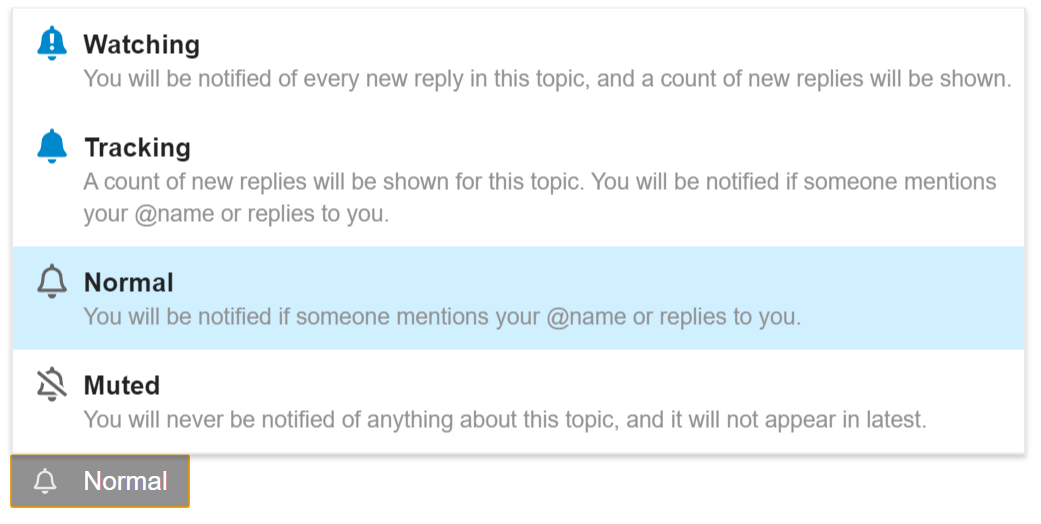
To change any of these defaults, including the choice of a dark theme, visit your user preferences.
How Communities Stay Healthy
I want to explain something about how Discourse works that's different from most forums: the trust level system. It's why communities can grow to thousands of members without becoming toxic wastelands.
The problem we were trying to solve: moderation doesn't scale. You can't hire moderators fast enough to keep up with growth. Most people can't even afford one full-time moderator. And burnout is real - ask anyone who's tried.
The solution: Make the community moderate itself.
When you first join, you're Trust Level 0 - new user. You can post, but there are some limits to prevent accidents while you're learning how things work. Spend 10 minutes reading across a few topics, and you automatically become Trust Level 1 - full posting rights, no restrictions.
Keep participating over a few weeks, and you hit Trust Level 2. Stick around actively for 100 days, and you automatically become Trust Level 3: a Regular. At that point, you can help organize topics, edit community wikis, and generally help maintain the place.
This is all automatic. No admin time required. As your community grows, the number of high-trust users grows proportionally. The community develops its own immune system.
Compare this to traditional forum moderation: either you have no protections (chaos) or you rely entirely on unpaid volunteers who eventually burn out or paid staff you can't afford to scale. Neither works long-term.
The only form of moderation that scales is the community itself. Trust levels are how Discourse makes that practical.
Look at the Rust programming language forum. It's been running for over a decade with thousands of active developers. The culture is consistently welcoming and helpful. That doesn't happen by accident - it happens because the trust system rewards good behavior and sandboxes problematic behavior automatically.
Learn more about how trust levels work →
 Jeff Atwood
If Your Community Speaks Multiple Languages
One challenge that's gotten easier: running communities across languages. Discourse now translates automatically.
How it works: you pick your language from a dropdown, and everything translates instantly. You can write replies in your own language even if the original post was in English (or Chinese, or Spanish, or whatever). It's bidirectional - everyone reads and writes in their native language, and the software handles the rest.
For admins: turn on localization, select which languages you want to support, done. Translations happen automatically. You can review flagged translations if quality becomes an issue, but mostly it just works.
Why this matters: if you're running an open source project, you can include contributors from anywhere without requiring everyone to speak English. If you're running an educational community, students can participate in their native language. If you're running a company forum, you can support all your markets without maintaining separate forums for each region.
Learn more about translations →
 nat
nat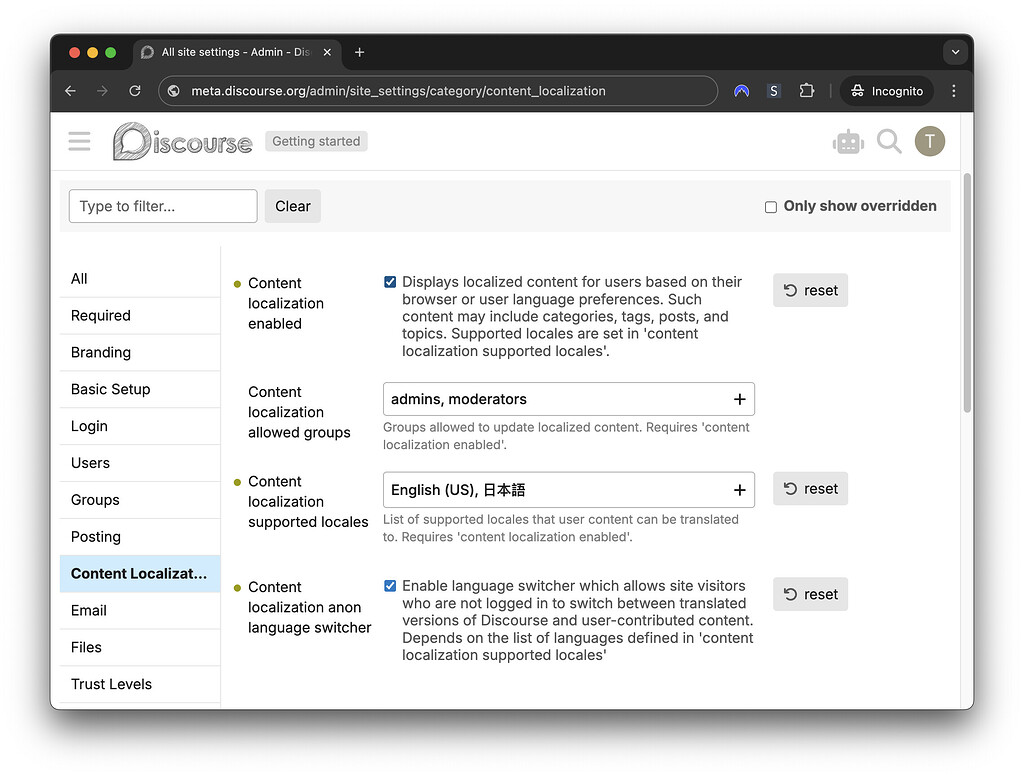
For more help
We have a few guides that go deeper on our community, meta.discourse.org:
- Our new user guide goes a bit deeper into everything a new user of Discourse should know
- If you're a new moderator, we have a guide for that, too
- Building a Discourse community covers the dinner party philosophy and how to think about launching
Want to see what Discourse looks like in practice?
Browse hundreds of communities across technology, gaming, hobbies, education, and more on Discourse Discover.

Interested in starting your own community?
- Start a free 14-day trial (no credit card required)
- Talk to our team if you have specific needs
Self-host for free - Discourse is open source and always will be
Comments